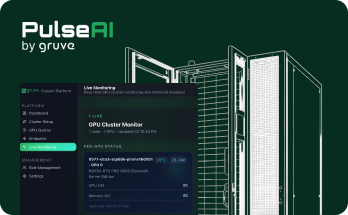
Just Launched Gruve PulseAI Platform, your private AI infrastructure, production-ready in under 2 weeks.PulseAI is live — private AI, ready in 2 weeks.

See PulseAI
Why Now

Attackers move in minutes,
disconnected tools don't

29 mins

average eCrime breakout time from initial access to lateral movement, down 65% from the year before (CrowdStrike 2026 Global Threat Report)

82%

of intrusions in 2025 were malware-free, using stolen credentials and native admin tools instead of malware (CrowdStrike 2026 Global Threat Report)

11

average number of separate security consoles an enterprise manages, limiting cross-tool correlation (Microsoft/Omdia State of the SOC, 2026)

Outcome in numbers

Cisco XDR outcomes you can measure

Typical roi

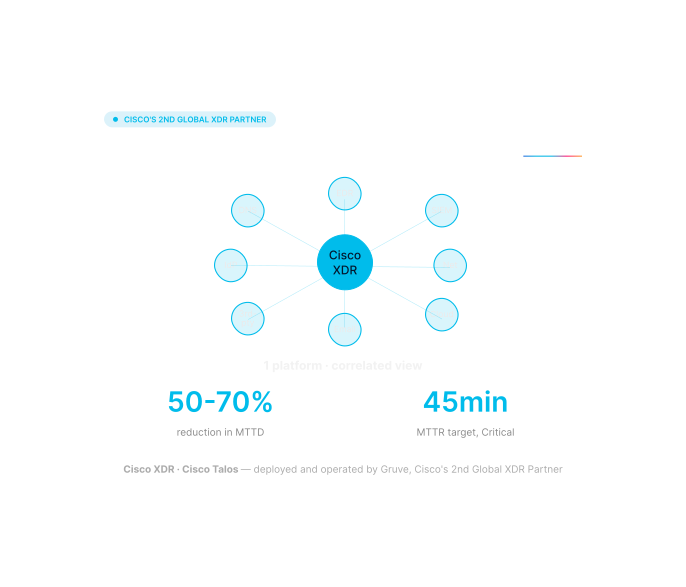
50–70%

reduction in mean time to detect (MTTD)

60%

reduction in manual alert triage effort through correlation and automation

45 min

target mean time to respond (MTTR) for critical-severity incidents

Time to value

2-4 weeks

Integration scoping complete

4–8 weeks

XDR deployment begins delivering correlated visibility

Ongoing

24/7/365 managed detection and response active after onboarding

Core services

Three ways we deliver Cisco XDR

From first deployment to ongoing operations,
pick the entry point that matches where you are today.

End-to-end deployment of Cisco XDR, including onboarding of endpoint, network, cloud, SIEM, and third-party data sources, with baseline correlation rules and automation workflows configured for production.

For organizations:

  • Deploying Cisco XDR for the first time
  • Moving from traditional monitoring toward integrated detection and response.
  • Preparing a foundation for in-house SOC operations or a future managed service
  • With an existing Cisco security ecosystem
Engagement Model Project-based, 4–8 weeks typical
Download solutions brief

Problems It Solves

  • Fragmented telemetry across disconnected security tools
  • No correlation platform tying alerts and incidents together
  • Manual, tool-by-tool investigation with no unified view
  • No baseline detection and response workflow to build on

How It Works

  1. 1 DesignRequirements gathering and integration scope definition
  2. 2 BuildCisco XDR tenant configuration and platform setup
  3. 3 IntegrateOnboard EDR/EPP, SIEM, and natively supported third-party tools
  4. 4 AutomateConfigure baseline correlation rules and automation workflows
  5. 5 ValidateTesting, tuning, and handoff documentation

Deliverables

  • Configured and validated Cisco XDR tenant
  • Integrated EDR/EPP, SIEM, and third-party data sources
  • Baseline correlation rules and detection logic
  • Baseline automation workflows
  • Documentation and knowledge transfer

Outcomes

  • Unified visibility across the security environment
  • Faster time-to-value from your Cisco XDR investment
  • Reduced tool-switching during investigations
  • Foundation for managed XDR or in-house SOC operations

24/7/365 monitoring, correlation, and incident response powered by Cisco XDR and delivered through Gruve's SecurityHub365 platform, enriched with Cisco Talos threat intelligence and backed by defined response SLAs.

For organizations:

  • Lacking in-house 24/7 SOC capability
  • Needing consistent, SLA-backed detection and response
  • Wanting to reduce alert fatigue through correlated, prioritized incidents
Engagement model Ongoing subscription, annual terms (priced on XDR license/endpoint count)

Problems it solves

  • No internal bandwidth for round-the-clock monitoring
  • Alert fatigue from disconnected, uncorrelated tooling
  • Slow, inconsistent incident response with no defined SLA
  • Limited or no proactive threat hunting capability

How it works

  1. 1 OnboardIngest native and third-party telemetry, plus SIEM alerts, into Cisco XDR
  2. 2 Monitor24/7/365 monitoring via Cisco XDR and SecurityHub365
  3. 3 EnrichCorrelate and prioritize incidents with Cisco Talos threat intelligence
  4. 4 RespondIncident response recommendations and automated remediation actions
  5. 5 Hunt & ReportQuarterly threat hunting and ongoing SLA compliance reporting

Deliverables

  • 24/7/365 monitoring and incident response against defined MTTR targets (Critical: 45 min, High: 1 hr, Medium: 2 hr, Low: 4 hr)
  • Integration support for a natively supported EDR/EPP solution plus five additional Cisco XDR integrations
  • Up to three customer-requested automation workflows built, tested, and rolled out per year
  • Quarterly threat hunting by the Gruve security operations team
  • Access to SecurityHub365 for onboarding, ticketing, and reporting
  • Optional add-on: full lifecycle management of the customer's EDR/EPP platform

Outcomes

  • Detection and response aligned to defined SLAs
  • Reduced alert fatigue through enrichment and prioritization
  • Continuous threat hunting coverage
  • Predictable operating cost with expert oversight and no added headcount

Focused, project- or retainer-based support for expanding Cisco XDR's data source integrations and building automation playbooks, for organizations that manage their own monitoring or use another provider for detection and response.

For organizations

  • Running Cisco XDR with monitoring handled in-house or by another provider
  • Needing new tools or data sources integrated into an existing Cisco XDR tenant
  • Wanting custom automation playbooks without outsourcing detection and response
Engagement model Project-based or retainer (block hours), scoped per engagement

Problems it solves

  • New tools or data sources not yet integrated into Cisco XDR
  • Manual, repetitive response tasks with no automation in place
  • Limited in-house expertise to build or maintain automation playbooks
  • Need for custom automation logic beyond out-of-the-box templates

How it works

  1. 1 ScopeIdentify integration and workflow requirements
  2. 2 IntegrateConfigure new data source integrations into Cisco XDR
  3. 3 DesignDefine playbook and workflow logic with customer input
  4. 4 BuildDevelop, test, and validate automation workflows
  5. 5 Deploy & OptimizeRoll out with customer sign-off and refine existing playbooks

Deliverables

  • New integration configurations in Cisco XDR
  • Documented, tested automation playbooks and workflows
  • Workflow testing and validation reports
  • Documentation and knowledge transfer

Outcomes

  • Expanded XDR data coverage
  • Reduced manual effort through automated response actions
  • Faster mean time to respond once incidents are detected
  • A playbook library tailored to your environment

Trusted by Security Leaders

"Enterprises need secure AI infrastructure that is simple to deploy,
trusted, and easy to manage from day one. Our work with Gruve brings
assurance directly into the PulseAI Platform, so enterprises can move
fast without compromising on governance or control."

https://gruve.ai/wp-content/uploads/2026/05/Frame-236-1.png

Cassie Roach

Global VP of Cloud and AI Infrastructure Partner Sales at Cisco
WHY GRUVE

Why Gruve for Cisco XDR

Deep Cisco XDR expertise, backed by Gruve's global delivery model and standing as Cisco's 2nd Global XDR Partner.

Cisco's 2nd Global XDR Partner

Recognized standing reflects deep, validated expertise delivering Cisco XDR at scale.

Proven expertise

Successful XDR deployment, integration, and managed service engagements delivered across enterprise environments.

Deep specialization

Dedicated XDR architects, automation engineers, and SOC analysts focused exclusively on Cisco’s security portfolio.

Flexible service models

Professional services for projects, managed services for ongoing operations, and retainer-based support for integration and automation work.

SecurityHub365 platform

Purpose-built ITSM platform for onboarding, ticketing, and reporting across every engagement.

70%

Security operations

Challenge: high volume of uncorrelated alerts across disconnected tools.

Result: reduction in mean time to detect.

60%

Operational efficiency

Challenge: manual, tool-by-tool alert triage.

Result: reduction in manual alert triage effort.


FAQs

Frequently asked questions about
Cisco XDR services

Is this the same as the Managed XDR Service?

No — XDR Deployment and Integration is a one-time, project-based engagement, and the Integration and Workflow Service is scoped for organizations that don’t want Gruve monitoring their environment. The Managed XDR Service is the ongoing, SLA-backed subscription that includes 24/7 monitoring, detection, and incident response. Many organizations start with a deployment, then move into Managed XDR.

What's the difference between the Integration and Workflow Service and Managed XDR?

The Integration and Workflow Service covers onboarding new data sources into Cisco XDR and building automation playbooks — it does not include monitoring, detection, or incident response. Managed XDR includes everything in that service plus 24/7/365 monitoring, incident response against defined SLAs, and quarterly threat hunting.

Do you support our existing EDR/EPP and SIEM platforms?

Yes. Cisco XDR natively supports leading EDR/EPP platforms and can ingest alerts from most major SIEM platforms via API. Deployment and Integration engagements onboard these sources, and Managed XDR includes integration support for one EDR/EPP solution plus five additional natively supported integrations.

How fast will you respond to a critical incident under Managed XDR?

Managed XDR is delivered against defined mean-time-to-respond (MTTR) targets: 45 minutes for Critical severity, 1 hour for High, 2 hours for Medium, and 4 hours for Low — measured from event detection to ticket establishment.

Can Managed XDR also manage our EDR/EPP platform?

Yes, as an optional add-on. The base Managed XDR Service covers integration support for your EDR/EPP solution; the add-on extends this to full lifecycle management, including configuration, troubleshooting, and day-to-day operation of the platform itself.

Get Started

Unify detection and response
with Cisco XDR

Expert Cisco XDR deployment, integration, automation, and managed services,
from first onboarding to full 24/7 operations, and everything after.

    Response within 24 hours · NDA available on request