Platform
Services
Pulse AI
An Agent-to-Silicon AI infrastructure platform built to keep your data secure and sovereign, enabling the next AI enterprise
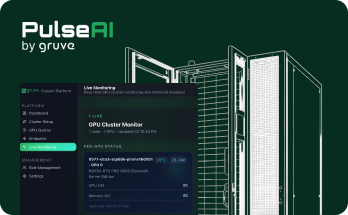
- Proven AI ComputeGPU capacity sized to your workload
- Private AI Control CenterYour models, data, and agents never leave
- Operations Off Your Plate24/7 managed. Zero added headcount.
Partnered with
Powered by
Designed for
Cisco-powered services
Gruve is a Cisco Strategy Services Partner delivering cisco-powered AI, enterprise, data center, and security solutions for customers.
Agentic security operations center service (AI SOC)
Embed AI agents into every layer of your security operations.
Digital forensics & incident response (DFIR)
AI-assisted digital forensics, compromise assessments, and continuous assurance that uncover hidden threats and deliver defensible, executive-ready insights.
Data & AI
Build governed data foundations that keep enterprise AI safe.
- Salesforce Agentforce advisory & AI strategy
- Agentforce implementation & AI agent development
- Salesforce & Agentforce managed services (AgentOps)
- Agentforce Quick Start, starter packs & accelerators
- AI enablement
- Advisory
- Implementation & migration
- EDI enablement
- Integrations
- Managed services
Managed AI security services
AI-native security designed to scale, adapt and iterate as enterprise AI evolves.
Assessment services
Implementation services
- AI SOC implementation service
- MCP security implementation
- Cybersecurity AI agent implementation
- OpenShift AI implementation service
Design services
Managed services
- AI SOC managed service
- Threat intelligence service
- AI managed AESM and AEBA service
- Platform
-
-
- Services
 Check all DFIR solutions


 What is an AI Compromise Assessment?