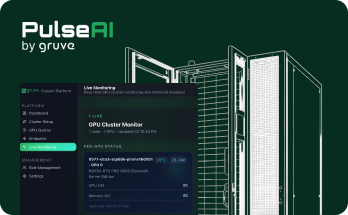
Just Launched Gruve PulseAI Platform, your private AI infrastructure, production-ready in under 2 weeks.PulseAI is live — private AI, ready in 2 weeks.

See PulseAI
Why Now

Yesterday's SIEM rarely
keeps pace with today's
alert volume 

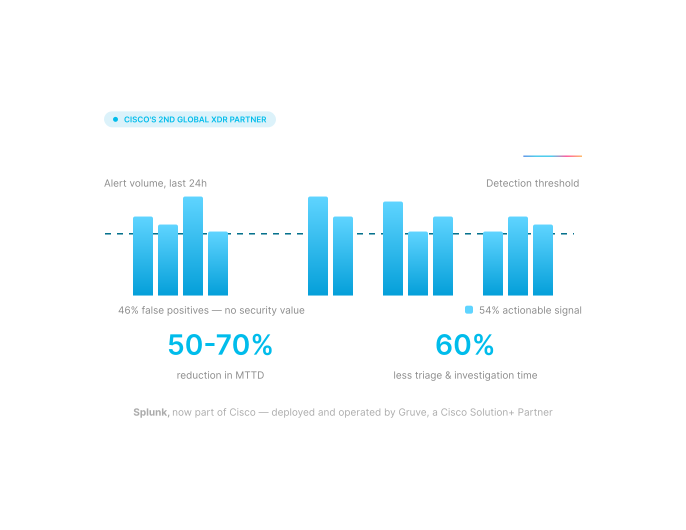
46%

of all security alerts turn out to be false positives, nearly half of every analyst's daily workload produces zero security value (Microsoft/Omdia State of the SOC, 2026)

11

average number of separate security consoles an enterprise manages, with 69% running 10+ detection tools (Microsoft/Omdia State of the SOC, 2026)

241 days

average time to identify and contain a data breach (IBM Cost of a Data Breach Report, 2025)

Outcome in numbers

Splunk outcomes you can measure

Typical roi

50–70%

reduction in mean time to detect (MTTD)

60%

reduction in alert triage and investigation time

70%

reduction in compliance audit preparation time

Time to value

2–4 weeks

Assessment complete

8-10 weeks

Phased implementation begins delivering value

16–20 weeks

Full production deployment

Core services

Four ways we deliver Cisco Splunk

From first assessment to ongoing operations, pick the entry point that matches
where you are today.

A focused review of your existing Splunk deployment, profiling architecture, data onboarding, detection content, and analyst workflows before you commit to a change.

For organizations:

  • Running Splunk with performance, licensing, or data quality issues
  • Planning a SOC modernization or Splunk re-architecture
  • Needing a second opinion on detection coverage and use-case maturity
Engagement Model One-time engagement, 2–4 weeks
Download solutions brief

Problems It Solves

  • Reduces unnecessary data consumption and licensing optimization.
  • Addresses architecture and configuration bottlenecks.
  • Identifies missing telemetry and detection coverage.
  • Detection gaps with no clear use-case roadmap
  • Identifies underutilized capabilities and improvement opportunities.

How It Works

  1. 1 DiscoverReview current architecture, data sources, and ingest volumes
  2. 2 AnalyseLicense utilization, indexing, and search performance analysis
  3. 3 EvaluateDetection content, use-case coverage, and SOC workflow review
  4. 4 ReportGap identification and prioritized roadmap monitor, tune guardrails, and report on compliance

Deliverables

  • Architecture and data onboarding review
  • License and ingest cost optimization analysis
  • Detection content and use-case maturity assessment
  • SOC workflow and analyst tooling review
  • Prioritized remediation roadmap

Outcomes

  • Clear visibility into Splunk and SOC health
  • Actionable “get well” plan
  • Reduced licenses spend and noise
  • Increased Return on Investment

End-to-end deployment of Splunk, from architecture design and data onboarding through production rollout and detection engineering, for new deployments or SOC modernization.

For organizations:

  • Implementing Splunk for the first time
  • Replacing or consolidating existing SIEM
  • Standing up or modernizing a SOC
Engagement model Project-based, 8–14 weeks typical

Problems it solves

  • No centralized visibility across security and IT data
  • Manual, inconsistent log collection and correlation
  • Existing SIEM that can't handle the current requirements
  • Missing or outdated detection content

How it works

  1. 1 DesignRequirements gathering, architecture, and sizing
  2. 2 BuildIndexer/search head cluster deployment (on-prem, cloud, or hybrid)
  3. 3 OnboardData source onboarding, validate and normalization (CIM compliance)
  4. 4 Content DevelopmentCorrelation searches, dashboards, and use-case development
  5. 5 HandoffKnowledge transfer and documentation

Deliverables

  • Sized and validated architecture
  • Onboarded and normalized data sources
  • Developed correlation searches and dashboards
  • Documented detection use cases
  • Documentation and knowledge transfer

Outcomes

  • Production-ready Splunk, on time and on budget
  • Centralized visibility across the environment
  • Reduced mean time to detect
  • Foundation for SOC modernization

Planned, low-risk migration of your Splunk environment (On Premise to Cloud or vice versa) or migration from an existing SIEM to Splunk to new infrastructure, Splunk Cloud, or a hybrid platform.

For organizations

  • Migrating On Premise Splunk to Cloud Splunk and Vice versa
  • Consolidating from a legacy or competing SIEM to Splunk
Engagement model Project-based, 6–10 weeks typical

Problems it solves

  • Risk of data loss or downtime during migration
  • Increase in cost and operational complexity due to poorly planned migration
  • Migration delays and adoption due to lack of inhouse expertise
  • Migration complexity distracts internal teams from core operations.

How it works

  1. 1 AssessMigration planning and risk assessment
  2. 2 BackupConfiguration, data, and knowledge-object backup and validation
  3. 3 MigrateMove/Develop data and content including indexes, apps, and knowledge objects to the new platform
  4. 4 ValidateTest searches, dashboards, and alerts in the target environment
  5. 5 CutoverExecute with a rollback plan ready

Deliverables

  • Migration plan and risk assessment
  • Design Document for Splunk
  • Tested target environment
  • Cutover and rollback plan

Outcomes

  • Zero data loss during migration
  • Next Gen, cloud-ready infrastructure
  • Cloud Deployment - Reduced Infrastructure management overhead
  • Minimal downtime

Ongoing, expert-led operation of your Splunk environment and SOC, monitoring, tuning, content development, and reporting so your team doesn't have to.

For organizations

  • Lacking in-house Splunk or SOC expertise
  • Needing to free internal teams for strategic work
  • Requiring 24/7 monitoring and response across distributed environments
Engagement model Ongoing subscription, annual terms

Problems it solves

  • No internal bandwidth for 24/7 SOC operations
  • Detection content that goes stale over time
  • Missed compliance reporting deadlines
  • Slow response to Splunk-related incidents and alerts
  • Reduced MTTD, MTTR

How it works

  1. 1 Monitor24/7/365 SOC monitoring and alert triage
  2. 2 RespondProactive alerting, investigation, and incident response
  3. 3 OptimizeOngoing detection content tuning and development
  4. 4 ReportMonthly performance, security, and compliance reports
  5. 5 SupportOngoing administration, patching, and license management

Deliverables

  • 24/7/365 monitoring and alert triage
  • Proactive alerting and incident response
  • Monthly performance and security reports
  • Compliance reporting support
  • Platform administration and patch management

Outcomes

  • Reliable Splunk SOC operations
  • Freed internal resources
  • Consistent compliance posture
  • Expert oversight without added headcount

Trusted by Security Leaders

"Enterprises need secure AI infrastructure that is simple to deploy,
trusted, and easy to manage from day one. Our work with Gruve brings
assurance directly into the PulseAI Platform, so enterprises can move
fast without compromising on governance or control."

https://gruve.ai/wp-content/uploads/2026/05/Frame-236-1.png

Cassie Roach

Global VP of Cloud and AI Infrastructure Partner Sales at Cisco
WHY GRUVE

Why Gruve for Cisco Splunk

Deep Splunk and SOC operations expertise, backed by Gruve's global delivery model and direct Cisco partnership.

Proven expertise

Successful Splunk and SOC engagements delivered across enterprise and regulated environments.

Deep specialization

Dedicated Splunk architects and SOC analysts focused exclusively on security data platforms and detection engineering.

Flexible service models

Professional services for projects, managed services for ongoing SOC operations.

Multi-environment support

Experience across on-premises, Splunk Cloud, and hybrid deployments.

Partnership with Cisco

Direct collaboration as a Cisco-authorized partner under the Cisco Solution+ program, ensures access to the latest Splunk and XDR capabilities.

50%

Security operations

Challenge: high volume of low-fidelity alerts.

Result: reduction in mean time to detect.

60%

SOC efficiency

Challenge: manual, fragmented data across tools.

Result: reduction in alert triage and investigation time.

FAQs

Frequently asked questions about
Cisco Splunk Services

Is this the same as Managed Services using Splunk?

No — Splunk/SOC Assessment and Splunk Implementation are one-time, project-based engagements. Managed Services using Splunk is the ongoing subscription service that takes over day-to-day SOC and platform operations after go-live. Many organizations start with an assessment or implementation, then move into Managed Services.

What triggers an assessment versus a full re-architecture?

An assessment makes sense before a license renewal, SOC transformation, or when alert volume and detection gaps have no clear root cause. A full re-architecture is typically scoped as a follow-on Implementation engagement once the assessment defines the roadmap.

Does this work with our existing data sources and tools?

Yes. Implementation and Migration engagements include onboarding and normalizing data from your existing infrastructure, security tools, and cloud platforms, mapped to Splunk’s Common Information Model (CIM).

Can this scale if we move to Splunk Cloud or expand our environment?

Yes. Implementation is built for phased rollouts across on-premises, cloud, or hybrid environments, and Migration supports moving to Splunk Cloud Platform as your footprint grows.

What do we get to show auditors or compliance teams?

Assessment engagements include a detection content and use-case maturity assessment. Managed Services adds ongoing compliance reporting and audit support, plus monthly performance and security reports you can share with auditors or leadership.

Get Started

Transform your security
operations with Splunk

Expert Cisco Splunk implementation and management services,
from first assessment to full production, and everything after.

    Response within 24 hours · NDA available on request